
Old - What is Zaatar?
What Is Zaatar? Is It a Spice, Seasoning, Condiment, or All of the Above?
Last updated August 2026
What is zaatar?
Zaatar, or za'tar (pronounced zaah-tur), is a common noun in Arabic with a dual meaning: it refers to both a Middle Eastern herb and spice mixture, and to a distinct herb plant in the mint family. In English, the herb is called bible hyssop or Syrian oregano, while the mixture is simply called zaatar.
Zaatar has an enduring heritage in the Levant (Syria, Lebanon, Palestine/Israel, Jordan) as a kitchen-table staple — simple, delicious, nutritious, and endlessly versatile. It's a condiment enjoyed as a dip with olive oil and bread, a topping on flatbreads and bakery items, and a seasoning sprinkled on all kinds of food.
Why do so many "zaatar" products taste different?
Zaatar's reputation is increasingly muddied by the growing number of seasoning mixes on the market claiming the zaatar name. While these mixes taste okay, they're often quite different from the taste and ingredient profile of an authentic zaatar blend. Authentic standards allow for some variation in flavor, but are strict about the mainstay genuine ingredients and overall flavor profile.
We believe the "zaatar" title is increasingly misused to describe products with little relation to the authentic mixture. It's common to see claims that there are countless zaatar recipes depending on region which implyes there's no real standard for flavor or quality. This is not true. Recipes vary, but there's only one zaatar taste that should be recognizable. The differences between authentic mixes tend to be in degree (added spices, ingredient grade) rather than in kind (the overall savory flavor).
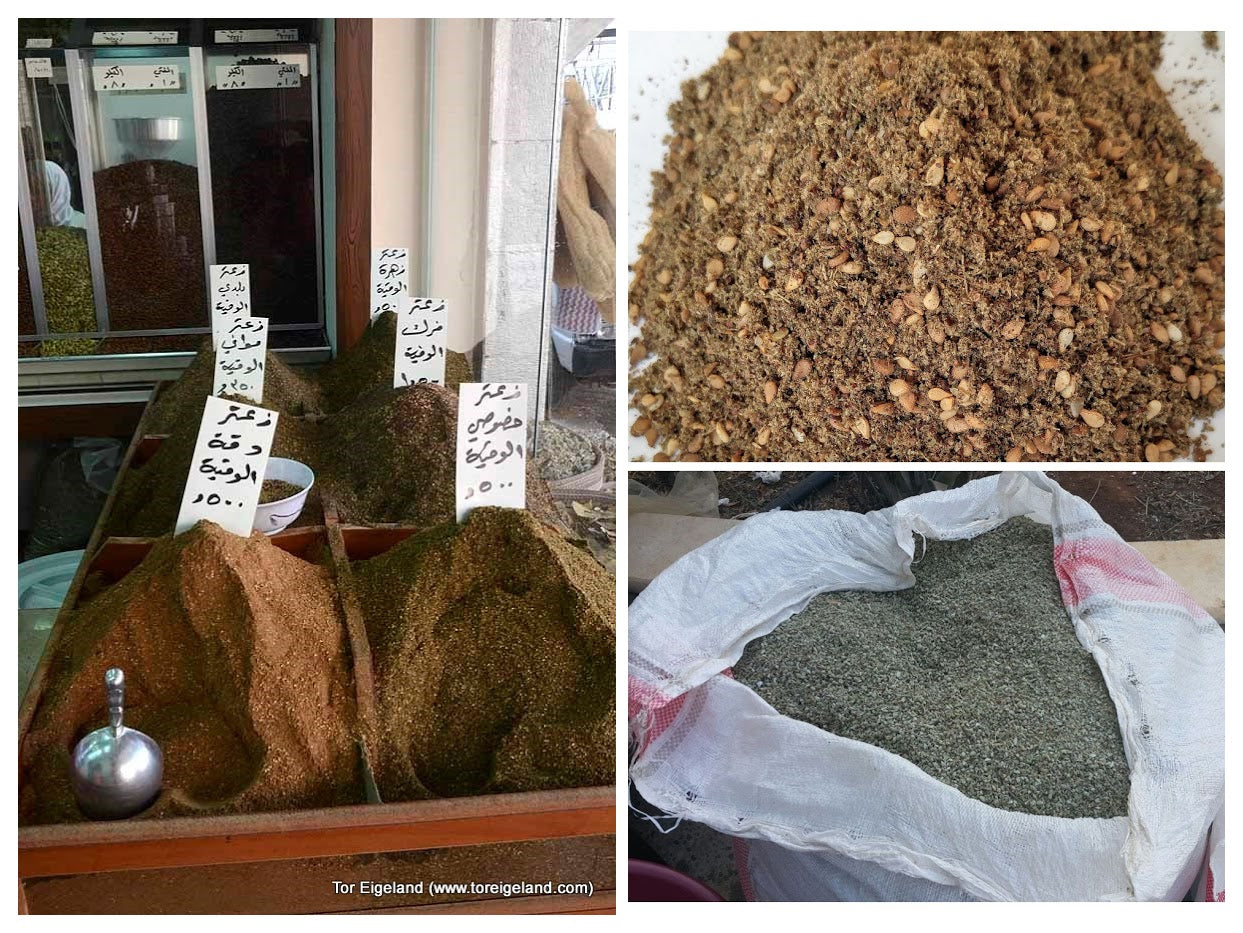
When the mainstay zaatar herb isn't available or affordable, lesser brands substitute plain thyme, oregano, or marjoram of varying quality grades. Many commercial brands also add fillers, like wheat or other undisclosed ingredients, to increase volume and cut costs (ground straw isn't uncommon in very low-quality mixes). The lemony, bright sumac ingredient matters just as much — cheap zaatar often substitutes citric acid for genuine sumac. Freshly roasted sesame seeds are the third pillar of flavor and texture.
What are the mainstay ingredients of authentic zaatar?
| Ingredient | Role & Flavor |
|---|---|
| Zaatar herb (Origanum syriacum) | The base — earthy, peppery notes close to thyme, oregano, and marjoram |
| Sumac | Bright, lemony tang without the acidity of citrus |
| Toasted sesame seeds | Nutty flavor and crunch |
| Sea salt (optional) | Rounds out and balances the overall flavor |
The texture of an authentic mix shouldn't be a fine spice powder — it should be coarse, herbal, fluffy, and free-flowing, with a nutty note from freshly roasted sesame seeds.

How do I use zaatar?
The easiest way to try zaatar is the traditional Middle Eastern dip: dunk fresh bread in quality olive oil, then dunk the oiled bread into the zaatar. It's also used to make zaatar flat bread called manakish (or manaesh), a beloved Middle Eastern flatbread made by spreading a paste of olive oil and zaatar over flatbread or pizza dough and baking it hot, with optional toppings like finely chopped tomatoes, onions, or mint leaves.
Because zaatar is aromatic, zesty, tangy, and nutty, it's a genuinely versatile condiment. Try it on bagels with cream cheese, yogurt, salads, vegetables, eggs, meats, fruit, or popcorn. More recently, zaatar has found its way into North American kitchens as a salad dressing base and a rub or crust for meats.
What makes zaatar special is its simplicity: it's non-perishable and can sit in a small dish alongside olive oil on the counter, ready to enjoy any time as a snack, a condiment, or a sandwish with olive oil.

Have a more specific question about zaatar — storage, substitutes, gluten, or where it comes from?
Visit our Zaatar FAQWhat is the zaatar (hyssop) herb plant?
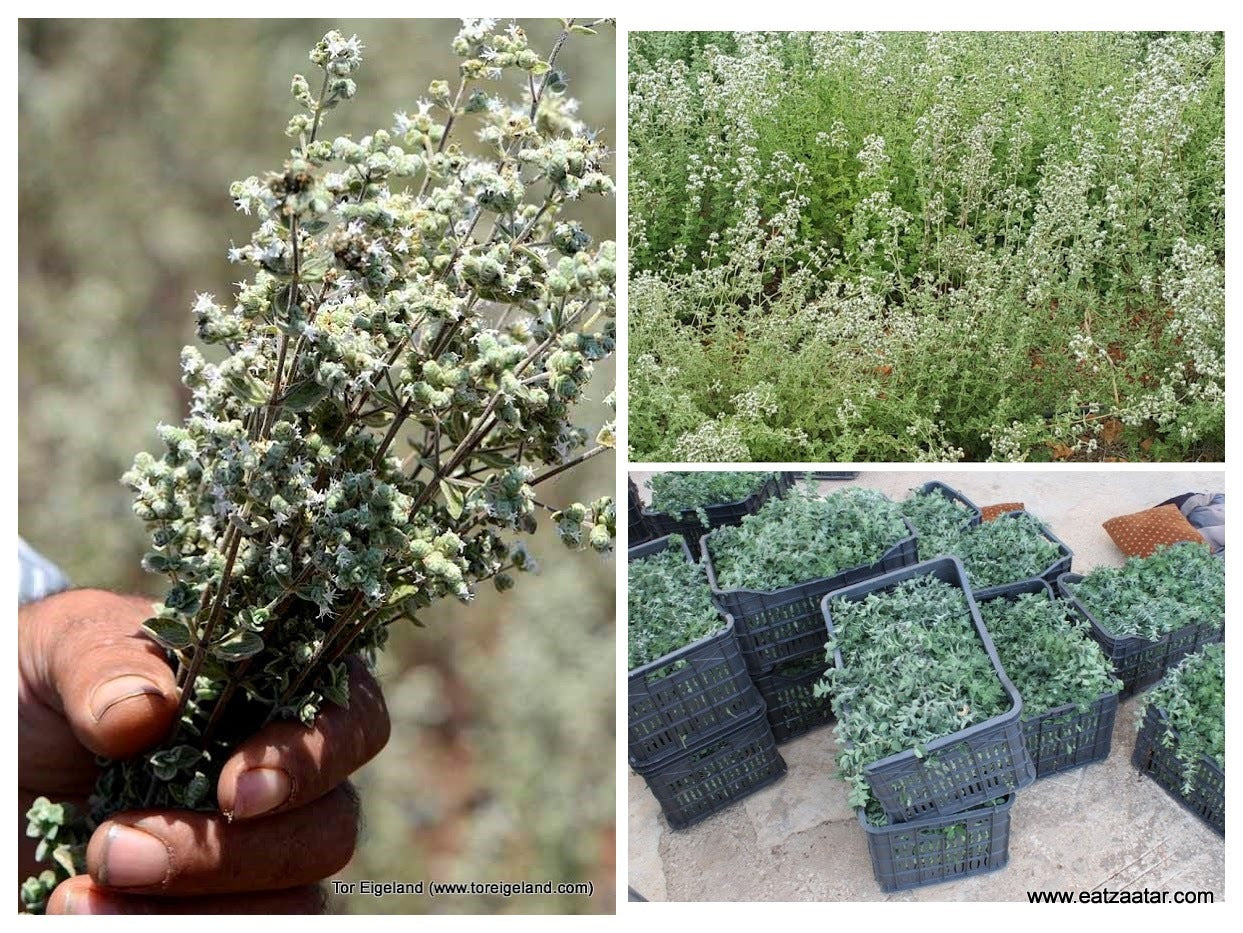
The zaatar herb plant is believed to be the same species as the biblical hyssop. Its scientific name is Origanum syriacum (also known as Majorana syriaca), part of the Origanum genus in the Lamiaceae (mint) family. Other Lamiaceae strains include Thymus serpyllum (wild thyme, native to Northern Europe) and Thymus vulgaris (English thyme, native to southern Europe) — but Origanum syriacum is native specifically to the Levant/East Mediterranean.
It grows as a short shrub up to about 2.5 feet tall, with small white flowers and fragrant, cottony leaves. As with most herbs, flavor comes down to essential oil content — the thymol and carvacrol levels in zaatar leaves drive flavor intensity, and that content varies significantly across the Middle East depending on soil and cultivation practices, ranging from a few to about forty grams per kilogram.

How is the zaatar herb processed?
The zaatar herb is harvested in summer and washed to clean the velvety leaves of accumulated dust. It's dried outdoors in the shade for several days, then bundled and left to rest indoors for one to two weeks until completely dry. The leaves are separated from the stems by hand or with basic tools, then sifted — first through wider sifters to remove stalks, then through finer sifters to separate twigs and larger leaves from the small leaves that go into the final blend.
In lower-quality mixes, the stalks and stems get ground up and used along with other fillers. Higher-quality mixes are sifted and hand-picked more thoroughly, and may go through an air-blower process to remove the leaves' cottony outer layer. The zaatar plant has grown wild in the Levant for as long as the region's history goes back, and while it's now also cultivated on farms (and can grow anywhere with a Mediterranean climate), processing remains labor-intensive, which is why production still favors the Middle East.
What are the health benefits of zaatar?
The zaatar herb has long been part of folk medicine in Middle Eastern cultures. Academic research has since confirmed some of these medical properties in Origanum syriacum: according to a review of the medical literature, the plant's essential oils show antimicrobial, anti-inflammatory, antioxidant, and antitumor activity. One easy way to enjoy these benefits is as a soothing herbal tea made from the dried zaatar leaf.
References
- Missouri Botanical Garden Plant Finder
- Identification of biblical hyssop and origin of the traditional oregano-group herbs in Mediterranean region
- Mohamad, Ranim et al. “Prospects for using Origanum Syriacum (L.) as a source of antimicrobial agents.” Journal of Advanced Pharmaceutical Technology & Research, vol. 12, no. 4, 2021, pp. 340–344. doi:10.4103/japtr.japtr_106_21